Router Basics: A Complete Guide for Beginners
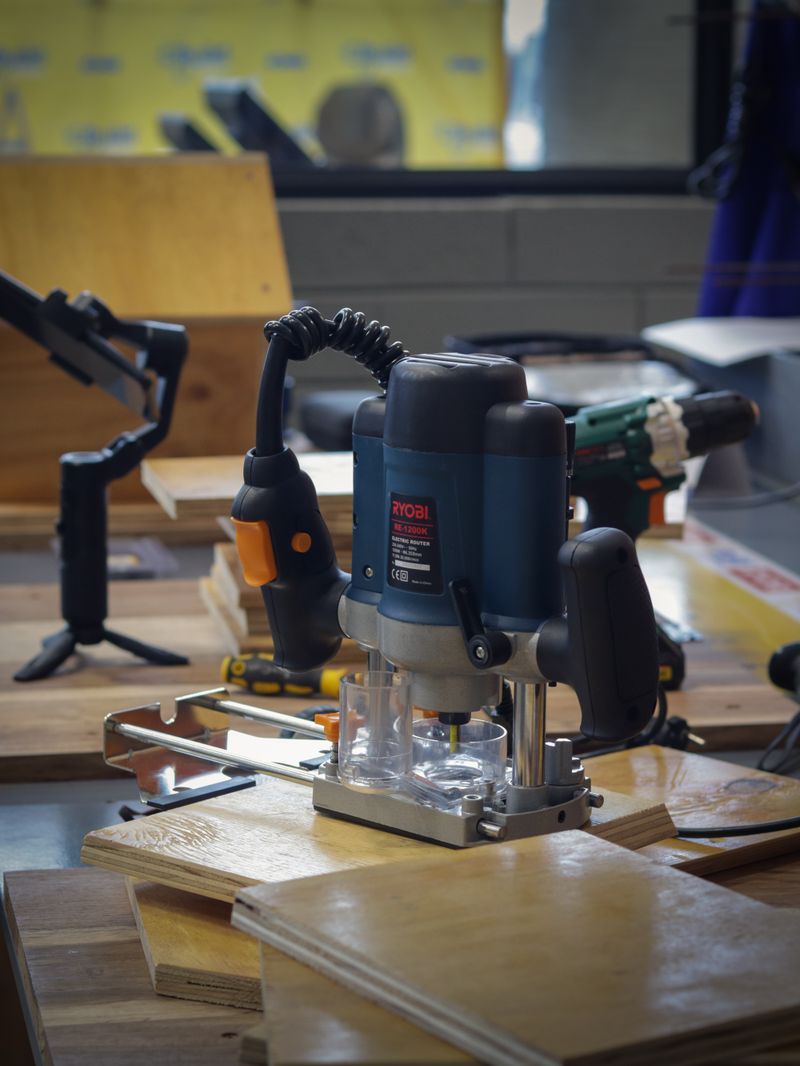
The router is arguably the most versatile power tool in the woodworking shop. With the right bit and technique, a router can cut decorative profiles, create joinery, flatten surfaces, hollow out mortises, and produce identical repeated parts. But this versatility comes with a learning curve. If you are new to routing, the sheer number of bits, techniques, and jigs can be overwhelming. This guide covers the fundamentals to get you routing confidently and safely.
Types of Routers
Fixed-Base Router
A fixed-base router holds the bit at a set depth throughout the cut. You adjust the depth before turning on the router, and it stays at that setting. Fixed-base routers are lighter, easier to control with one hand, and ideal for edge routing, template work, and table-mounted operations. Most beginners find fixed-base routers easier to learn on.
Plunge Router
A plunge router allows you to lower the spinning bit into the workpiece from above. This is essential for cutting mortises, stopped grooves, deep hollows, and any cut where you cannot start from the edge. Plunge routers are heavier and more powerful, typically ranging from 2 to 3.5 horsepower.
Trim Router (Laminate Trimmer)
A compact, lightweight router designed for trimming laminate flush and light edge work. Trim routers use 1/4-inch shank bits and are easy to control with one hand. They are surprisingly versatile for their size and a great entry point for beginners.
Combo Kits
Many manufacturers offer combo kits that include both a fixed base and a plunge base for the same motor. This gives you the best of both worlds in a single purchase.
Essential Router Bits
Start with these fundamental bits and expand your collection as needed:
Straight bits (1/4-inch and 1/2-inch) cut grooves, dadoes, and mortises. They are the most commonly used bits in any shop.
Roundover bits ease sharp edges with a smooth radius. A 1/8-inch or 1/4-inch roundover is used on nearly every project.
Flush-trim bits have a bearing that rides along a template or edge, cutting the workpiece flush. Essential for pattern routing and trimming veneer or laminate.
Chamfer bits cut a 45-degree bevel along edges, adding visual interest and removing sharp corners.
Rabbeting bits cut rabbets along board edges. Most rabbeting bits come with interchangeable bearings for different rabbet depths.
Dado and straight bits in various widths handle joinery cuts and grooving operations.
Always buy bits with 1/2-inch shanks when possible. They are stronger, vibrate less, and produce smoother cuts than 1/4-inch shank bits.
Basic Router Techniques
Edge Routing
The most common router operation is profiling an edge. Install the desired profile bit, set the depth, and guide the router along the edge of the workpiece. The bit’s pilot bearing rides along the wood, controlling the depth of cut.
Always rout in the correct direction. When the router is handheld, move it left to right on the near edge (between you and the router) and right to left on the far edge. This is called “climb cutting” avoidance — routing against the rotation of the bit prevents tear-out and loss of control.
Routing Grooves and Dadoes
Use a straight bit with an edge guide to rout grooves parallel to an edge. Set the edge guide to the desired distance from the edge, set the bit depth, and make the cut in progressively deeper passes. Never try to cut a deep groove in a single pass — take 1/8 inch per pass to avoid overloading the bit and burning the wood.
Pattern Routing
Attach a template to your workpiece with double-sided tape or screws. Install a flush-trim bit with a bearing that matches the template thickness. The bearing rides along the template while the bit cuts the workpiece to the exact shape of the template. This technique produces identical, repeatable parts.
Router Table
Mounting your router in a table transforms it into a stationary shaper. Router table operations include edge profiling, raised panels, dovetail joinery, and flush trimming long edges. A router table provides better control for small parts and allows you to use both hands to guide the workpiece.
Build or buy a router table with a flat, rigid top, an accurate fence, and a dust collection port. A Kreg Pocket Hole Jig K5 pairs well with router-cut joints for cabinet assembly.
Safety
Always wear eye and ear protection. Secure the workpiece with clamps — never hold it with your free hand. Start the router before the bit contacts the wood. Make multiple shallow passes rather than one deep cut. Keep the router moving to avoid burning. Unplug the router when changing bits, and always tighten the collet firmly.
Bit Setup and Test Cuts
A router bit should be fully seated in the collet, then pulled back slightly before tightening. Bottoming the bit out can prevent the collet from clamping evenly. Tighten firmly with the correct wrenches, unplug the router while making adjustments, and spin the bit by hand before powering on to confirm it clears the base, fence, and workpiece.
Make test cuts in scrap from the same project before routing the final piece. This confirms bit height, bearing contact, feed direction, and the final profile. For deep grooves or large roundovers, make multiple shallow passes rather than one heavy cut. The surface will be cleaner, the bit will run cooler, and the router will be easier to control.
Feed Direction and Tear-Out Control
When using a handheld router on an outside edge, feed from left to right so the bit rotation pulls the base against the work. On a router table, the workpiece usually feeds from right to left. Climb cuts can reduce tear-out in special cases, but they also pull the router forward aggressively and should be used only in very light passes with a secure grip.
To reduce tear-out, rout end grain first and long grain second. Any small chip-out at the corner is cleaned up by the following long-grain pass. Sharp bits, backing boards, and light final passes make a bigger difference than forcing the tool slowly through the cut.
Related Articles
The router is a natural companion to the table saw. Before operating either tool, review the table saw safety guide for the safety habits and kickback prevention techniques that apply across all power tools. Routers produce a significant amount of fine dust — the dust collection setup guide explains how to manage it with a shop vacuum and ambient air filtration. For a project that puts router skills to immediate use, building floating shelves uses a router to apply roundovers and profile the front face.

The Carpenter's Guide Editorial Team
Independent trade-focused editorial team