Best Cordless Drills for Woodworking of 2026: Top Picks
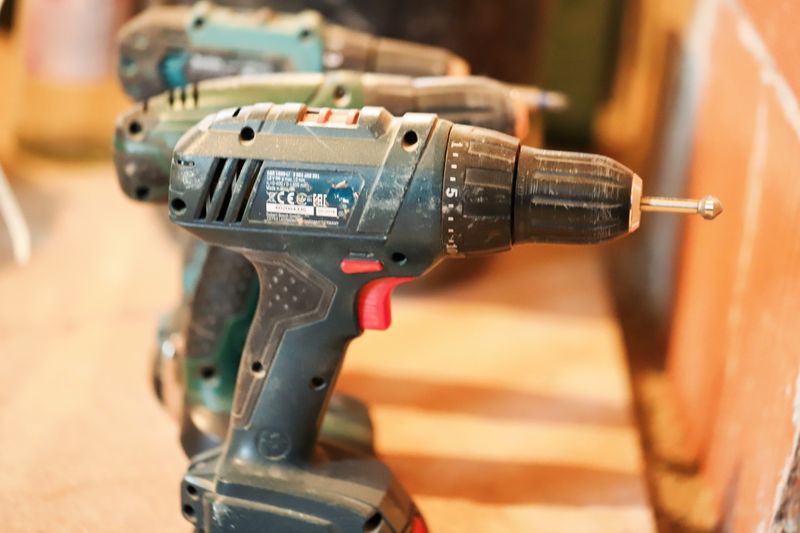
If there’s a second tool every woodworker and carpenter needs after a saw, it’s a cordless drill. You’ll use it to drive screws into pocket holes, bore pilot holes before assembly, drill out mortises before chiseling, and fasten hardware to finished pieces. A good cordless drill makes every stage of a project faster and more accurate — a bad one forces you to work around it.
The market has matured considerably. Today’s brushless 18V and 20V drills produce more torque, run longer on a charge, and last far longer than the brushed tools that dominated a decade ago. The real question isn’t whether to buy brushless — it’s which platform to commit to, and whether a combo kit with an impact driver is the smarter starting point. This guide covers what matters when buying a cordless drill for woodworking and the best options in 2026 at every budget.
Types of Cordless Drills
Drill/Drivers
The drill/driver is the tool most people mean when they say “cordless drill.” It uses a keyless chuck (typically 1/2-inch) to hold twist bits, spade bits, Forstner bits, screwdriver bits, and hole saws. A clutch ring around the chuck lets you set a maximum torque threshold — when the screw reaches the set depth, the clutch slips to prevent stripping.
Drill/drivers are the most versatile cordless tool in a woodworking shop. They handle everything from boring 1/8-inch pilot holes to driving 3-inch structural screws. For cabinet work, furniture building, and general carpentry, the drill/driver is the workhorse.
Impact Drivers
An impact driver looks similar to a drill but works very differently. Instead of a 1/2-inch chuck, it uses a 1/4-inch hex collet and delivers rotational blows — impacts — to break screws loose or seat them with torque a standard drill/driver can’t match. For driving long deck screws, lag bolts, and structural fasteners, an impact driver is faster and easier on your wrist than a drill.
For woodworking specifically, the impact driver’s limitation is its 1/4-inch hex collet: you need hex-shank bits to use it. Twist bits, Forstner bits, and most hole saws require a standard chuck. Most woodworkers own both — a drill/driver for boring and a 1/4-inch impact driver for driving fasteners. A combo kit that includes both tools is almost always the best value starting point.
Hammer Drills
Hammer drills add a hammering action along the drill axis — designed to drive masonry bits into concrete, brick, and mortar. For woodworking and carpentry, the hammer function is rarely needed. If you’re building furniture or doing interior carpentry, skip the hammer drill. If you’re doing renovation work that includes anchoring into concrete or masonry, a hammer drill/driver combo covers all bases.
Right-Angle Drills
Right-angle drills orient the chuck at 90° to the body, letting you drill in tight spaces where a standard drill can’t fit. For kitchen cabinet installation, framing in tight corners, and any situation where clearance is limited, a right-angle drill is invaluable. These are specialty tools — most woodworkers add one only after identifying a specific need.
Key Features to Evaluate
Battery Platform: The single most important buying decision for cordless tools is which battery platform to commit to. DeWalt 20V MAX, Milwaukee M18, Makita 18V LXT, and Ryobi ONE+ are the dominant platforms — all four offer extensive tool libraries. Batteries from one brand don’t work in another. If you already own tools from one manufacturer, stay on that platform. Starting fresh? Milwaukee M18 and DeWalt 20V MAX offer the broadest professional tool selections; Ryobi ONE+ offers the most budget-friendly entry point.
Brushless vs. Brushed Motors: Brushless motors are no longer a premium feature — they’re standard on any drill worth buying in 2026. A brushless motor uses electronics instead of carbon brushes to control the motor, which produces more torque per watt, generates less heat, and extends motor life dramatically. The runtime improvement per charge is typically 30–50% compared to brushed equivalents. Only buy a brushed drill if the price is exceptional and you expect light, occasional use.
Chuck Size: A 1/2-inch chuck accepts larger bit shanks than a 3/8-inch chuck — including large spade bits, Forstner bits up to 2-1/2 inches, and hole saws. For woodworking, a 1/2-inch chuck is strongly preferred. A 3/8-inch chuck limits the bit selection you can use.
Clutch Settings: More clutch settings give you finer control over how deep screws are driven. A drill with 15–25 clutch positions handles the range from delicate pocket-hole screws in plywood to long structural screws in dense hardwood. Cheaper drills with 5–10 positions are harder to set precisely.
Speed Modes: Most quality drill/drivers have two speed ranges: a low-speed/high-torque mode for driving screws and a high-speed mode for boring holes. A drill with variable trigger speed plus two gear ranges covers essentially all woodworking tasks.
Compact vs. Full-Size Body: Compact drills are shorter and lighter — better for overhead work, drilling in tight spaces, and extended use where weight fatigue is a factor. Full-size drills typically deliver more torque and hold larger battery packs. For most woodworking applications, a compact brushless drill is entirely capable and significantly easier to use for long sessions.
Top Cordless Drill Recommendations
Best Overall: DeWalt DCD791D2 20V MAX Brushless Compact Drill Kit (~$150–$180)
The DeWalt DCD791D2 is the drill/driver that hits the best balance of performance, value, and platform access. The brushless motor produces 460 UWO (unit watts out) of power — more than enough for any woodworking task — and the compact body is only 7.0 inches long. Two 2.0Ah batteries and a charger are included. The 15-position clutch and two-speed transmission (0–550 / 0–2,000 RPM) cover every task from seating small cabinet screws to boring 1-inch holes with a spade bit.
The 20V MAX platform is the most important feature for many buyers: DeWalt’s battery ecosystem includes every power tool a carpenter or woodworker needs, from circular saws and jigsaws to random orbital sanders and routers. Starting with this drill opens the door to the whole platform.
Build quality is exactly what you’d expect from DeWalt — the chuck is solid, the clutch ring turns smoothly, and the grip ergonomics are comfortable for all-day use.
Search the DeWalt DCD791D2
Best Combo Kit: DeWalt DCK299D1W1 20V MAX Brushless Drill and Impact Driver Kit (~$220–$280)
For woodworkers starting from scratch, buying a combo kit that includes both a drill/driver and an impact driver is almost always the right call. The DeWalt DCK299D1W1 includes the DCD791 compact drill and the DCF887 impact driver — the two tools you’ll reach for constantly in a woodworking shop. The kit ships with two batteries, a charger, and a bag.
The DCF887 impact driver is one of the best in its class: three-speed settings, a brushless motor producing 1,825 in-lbs of torque, and a precision mode for controlled driving in finished woodwork. When the drill bores the pilot hole and the impact driver drives the screw, the pace of a build speeds up noticeably.
At the combo kit price, you get two premium brushless tools for roughly what you’d pay for either individually at retail. For anyone building furniture, cabinets, or doing renovation carpentry, this is the best single purchase in the cordless tool category.
Search the DeWalt 20V MAX Drill and Impact Combo Kit
Best Pro Pick: Milwaukee 2804-22 M18 FUEL Drill/Driver Kit (~$250–$300)
The Milwaukee 2804-22 is the premium option for woodworkers who push their tools hard. The M18 FUEL brushless motor produces 1,200 in-lbs of torque — substantially more than most competitors in the category — and the REDLINK PLUS intelligence system communicates between the battery and the tool to prevent overloads and optimize power delivery.
The 2804-22 is noticeably heavier than compact DeWalt options, but the additional heft comes from the full-size motor and the thicker grip that many professionals prefer for heavy use. Two 5.0Ah batteries provide an enormous runtime reserve — on a full charge, each battery handles a complete day of typical carpentry work without interruption.
Milwaukee’s M18 platform rivals DeWalt in breadth, with every tool a serious woodworker or contractor needs available on the same battery system. If you’re committing to Milwaukee, this is the drill to start with.
Search the Milwaukee 2804-22 M18 FUEL drill kit
Best Compact: Makita XFD131 18V LXT Brushless 1/2-Inch Driver Drill Kit (~$160–$200)
Makita’s XFD131 is the right answer for woodworkers who prioritize ergonomics and light weight. At just 4.0 pounds (including battery), it’s one of the lightest brushless 1/2-inch drill/drivers available — something you notice immediately when drilling overhead, working in tight cabinet spaces, or using the drill for extended sessions.
The compact body doesn’t sacrifice capacity. The XFD131 delivers 530 in-lbs of torque, 16 clutch settings, and a two-speed transmission (0–400 / 0–1,500 RPM). For furniture building, cabinet installation, and detailed woodworking where precision matters more than brute force, the balance of the Makita is genuinely pleasurable to use.
Makita’s 18V LXT is a mature platform with an enormous tool library — over 275 compatible tools — which makes it a strong choice if you expect to expand your cordless tool collection over time.
Search the Makita XFD131 drill kit
Best Budget: Ryobi PSBDD01K 18V ONE+ HP Brushless Compact Drill Kit (~$100–$130)
For the woodworker on a tight budget, or someone who needs a capable drill for occasional use, the Ryobi PSBDD01K from the HP (High Performance) brushless line is the best value available. Brushless motor, 1/2-inch chuck, 24-position clutch, and two-speed transmission — a feature set that beats drills from premium brands that cost twice as much.
Ryobi’s ONE+ platform is the most expansive tool ecosystem by sheer product count, with over 300 compatible tools across 18V ONE+ and 18V ONE+ HP lines. The trade-off compared to Milwaukee or DeWalt is build quality in heavy professional use — Ryobi tools are designed for homeowners and hobbyists, not contractors running them all day every day. For a home woodworking shop where the drill sees moderate use, the difference in durability is unlikely to matter.
The PSBDD01K ships with a 2.0Ah battery and charger. Adding a second battery from Ryobi’s ONE+ lineup is inexpensive compared to DeWalt or Milwaukee battery prices.
Search the Ryobi ONE+ HP Brushless drill kit
Best for Heavy Renovation Work: Milwaukee 2997-22 M18 FUEL 2-Tool Combo Kit (~$400–$480)
For carpenters and contractors doing renovation work that combines woodworking with masonry, lag bolts, and structural fasteners, the Milwaukee 2997-22 combines the M18 FUEL hammer drill/driver with the M18 FUEL 1/4-inch hex impact driver. The hammer drill adds the percussion mode needed for anchoring into concrete and drilling through tile — tasks the standard drill/driver handles poorly.
The M18 FUEL platform delivers professional-grade performance: the hammer drill produces 1,200 in-lbs of torque with 0–32,000 BPM in hammer mode, and the impact driver delivers 2,000 in-lbs with three-speed control. For general carpentry this is overkill. For renovation, remodeling, and any work that involves masonry as well as wood, this combo kit covers everything.
Two 5.0Ah batteries are included — enough runtime for a full day of heavy professional use.
Search the Milwaukee 2997-22 M18 FUEL combo kit
Which Cordless Drill Is Right for You?
- Starting from scratch, moderate budget (~$220–$280): DeWalt combo kit — two tools, one battery platform, the best value starting point
- Budget under $130, home hobby use: Ryobi PSBDD01K ONE+ HP brushless kit
- Professional carpentry, want the lightest drill possible: Makita XFD131
- Professional or serious production use, already on Milwaukee: Milwaukee 2804-22 M18 FUEL
- Renovation and masonry combined with woodworking: Milwaukee 2997-22 M18 FUEL hammer drill combo
Cordless Drill Tips for Woodworkers
Always drill pilot holes before driving screws into hardwood. Skipping the pilot hole in oak, maple, or walnut almost always splits the wood near an edge or end grain. Match the pilot bit to the screw shank diameter — not the thread diameter.
Set the clutch before driving. Start the clutch setting lower than you think you need and test-drive a screw in scrap wood of the same species. Incrementally increase the setting until the screw seats flush without stripping. This protects pocket-hole screw heads, which are especially easy to cam out with the clutch too high.
Use the drill mode (not clutch) when boring holes. The drill icon on most drill/drivers bypasses the clutch entirely, so the chuck won’t slip mid-bore through thick stock. Use this mode for all hole drilling; save clutch mode for driving fasteners.
Match the battery capacity to the task. A 2.0Ah battery is lighter and fine for drilling and driving in a shop setting with access to a charger. A 5.0Ah battery adds significant weight but is worth it for a full day of on-site work. Many woodworkers keep one 2.0Ah battery in the drill for shop use and larger packs in reserve for site work.
Charge batteries before storage. Lithium-ion batteries stored at full charge degrade faster than those stored at 30–50% charge. If you won’t use the tool for a month or more, run the battery down slightly before putting it away. Most modern chargers have a storage mode that sets the battery to an optimal charge level automatically.
Keep a right-angle attachment on hand. Even if you don’t own a dedicated right-angle drill, a right-angle drill attachment for a standard 1/4-inch hex collet fits in a kit bag and saves the day when you need to drive a screw in a cabinet corner or between joists. A $25 attachment is much cheaper than a dedicated right-angle drill.
Related Articles
For driving fasteners efficiently in cabinet and furniture work, the pocket hole joinery guide covers Kreg Jig setup and pocket-hole screw selection — the most common use case for a drill/driver in a woodworking shop. If you’re building a complete shop tool set, the essential carpentry hand tools guide covers the hand-tool baseline every woodworker needs alongside their power tools. And for the power tool that pairs most closely with a cordless drill on site and in the shop, the miter saw buying guide covers the crosscutting tool that handles the cuts your drill can’t.

The Carpenter's Guide Editorial Team
Independent trade-focused editorial team