Dado and Rabbet Joints: When and How to Use Them
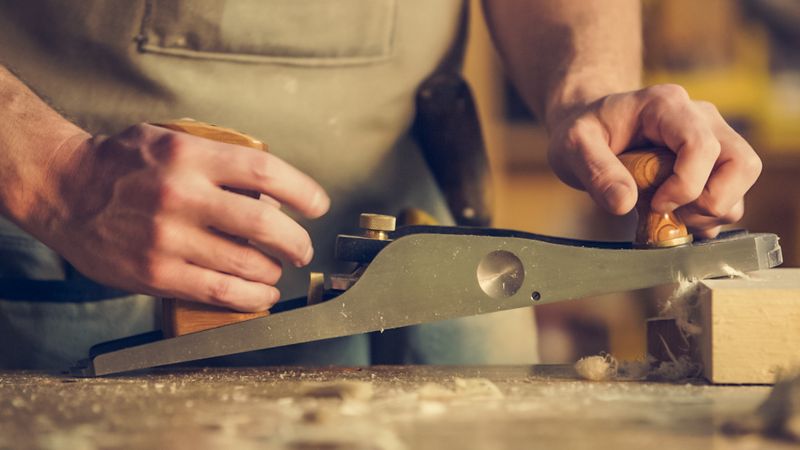
Dado and rabbet joints are among the most practical and widely used joints in woodworking. They provide excellent mechanical strength, are relatively easy to cut, and appear in everything from bookcases and cabinets to drawer boxes and tool chests. Understanding when and how to use these joints — and how to cut them accurately — will significantly expand your woodworking capabilities.
What Is a Dado Joint?
A dado is a square-walled channel cut across the grain of a board. The mating part fits into this channel, creating a strong mechanical connection that resists lateral movement. Dadoes are primarily used in casework — bookshelves, cabinets, and any project where horizontal shelves meet vertical sides.
A through dado runs the full width of the board and is visible from both edges. A stopped dado (or blind dado) ends before reaching the front edge, creating a cleaner appearance. Stopped dados require more careful layout and cutting but are preferred for fine furniture.
What Is a Rabbet Joint?
A rabbet is a recess cut along the edge or end of a board. It is essentially a dado that is open on one side. Rabbets are used for cabinet backs, drawer fronts, picture frames, and anywhere two boards meet at a right angle where one needs to be set into the other.
A single rabbet has one board rabbeted to accept the full thickness of the mating board. A double rabbet has both boards rabbeted, with each accepting half the thickness of the other. Double rabbets are stronger because they provide more gluing surface.
When to Use Dado Joints
Use dado joints for shelf-to-side connections in bookcases and cabinets. The dado provides mechanical support that prevents the shelf from sagging under load — the weight transfers directly into the side panel rather than relying solely on fasteners or glue.
Use dadoes for drawer bottoms, where a groove in the drawer sides accepts a thin plywood bottom. This allows the bottom to float, accommodating seasonal wood movement.
Use dadoes for partition dividers in cabinets, mail sorters, and organizers where vertical dividers intersect horizontal shelves.
When to Use Rabbet Joints
Use rabbet joints for cabinet backs, where a thin plywood back fits into a rabbet cut into the back edges of the sides, top, and bottom. This creates a clean, professional look and hides the plywood edges.
Use rabbets for half-lap joints, where two boards of equal thickness each have a rabbet cut to half their thickness, then overlap. Half-lap joints are incredibly strong and used in frame construction.
Use rabbets for joining boards at right angles, like the corners of a box where the front panel overlaps the side panel.
Cutting Dadoes with Power Tools
The most efficient way to cut dadoes is with a stacked dado set on the table saw. A dado set consists of two outer blades and a series of interior chippers that determine the width of the cut. Set the blade height to the depth of the dado (typically 1/4 to 1/3 the thickness of the stock) and make the cut in a single pass.
For stopped dados, use a router with a straight bit and an edge guide. Mark the start and stop points clearly, and rout the dado in incrementally deeper passes to avoid tear-out. A Festool DOMINO DF 500 Joiner offers another option for loose tenon joinery in similar applications.
Cutting Rabbets with Power Tools
On the table saw, cut rabbets using a dado blade set or by making two passes with a standard blade — one to establish the depth and one to establish the width. Always use a push stick and a featherboard for safety.
A router with a rabbeting bit (which has a pilot bearing that rides along the edge) makes quick work of rabbets. The bearing controls the depth automatically, and the cut is clean and accurate. This is the preferred method for rabbets on curved or irregular edges.
Cutting by Hand
For hand-cut dadoes, use a dado plane or a router plane after sawing the shoulders with a tenon saw. Mark the dado walls with a marking gauge and a sharp knife, saw to depth on both sides, and clean out the waste with a chisel. Hand-cut dadoes require patience but develop skills that translate to every area of woodworking.
For hand-cut rabbets, mark the rabbet with a marking gauge, saw the shoulder with a tenon saw, and pare the waste with a chisel. A rabbet plane (like a Stanley 78) can clean up and fine-tune the bottom of the rabbet for a perfect fit.
Tips for Tight Joints
Test the fit with a scrap piece before cutting into your project wood. The mating piece should slide into the dado or rabbet with gentle hand pressure — not so loose that it wobbles, and not so tight that you need to force it. A snug fit creates the strongest glue joint.
Apply glue sparingly to avoid squeeze-out that shows on finished surfaces. Use a small brush or glue bottle with a narrow tip for precise application. Clamp the joint firmly but not so tightly that all the glue squeezes out.
Layout and Test Cuts
Accurate dadoes and rabbets start with layout, not the blade. Mark both edges of the joint with a knife or sharp pencil, then mark the waste area clearly. If you are cutting several identical shelves or dividers, clamp the parts together and transfer the layout lines as a group so the joints align.
Always make a test cut in scrap from the same material. Plywood is rarely exactly 3/4 inch thick, so a dado set labeled for 3/4 inch plywood may still need shims. The fit should be snug enough that the mating piece stands without wobbling, but loose enough that glue has somewhere to go. A joint that requires a mallet during dry fit will usually split, bow, or starve the glue line during final assembly.
Glue-Up Strategy
Dry assemble the case before applying glue and check the diagonals for square. Dadoes help parts register, but they do not guarantee the assembly is square. Use cauls, clamps across both directions, and a known-square reference to keep the case from racking.
Apply glue to the walls of the dado or rabbet rather than flooding the bottom. Excess glue at the bottom has nowhere to escape and can prevent the mating piece from seating fully. Keep a small brush and a damp rag nearby for squeeze-out.
See Also
Dado and rabbet joints are especially useful when building floating shelves, where dadoes in the shelf body provide structural support. If you want to explore alternative methods for joining panels and frames, the biscuit joiner vs. Domino comparison covers loose-tenon options that complement dado joinery. For the most demanding joinery applications, the guide to Japanese joinery techniques explores traditional interlocking joints that take the craft to a higher level.

The Carpenter's Guide Editorial Team
Independent trade-focused editorial team