Wainscoting and Chair Rail Installation: Step-by-Step Guide
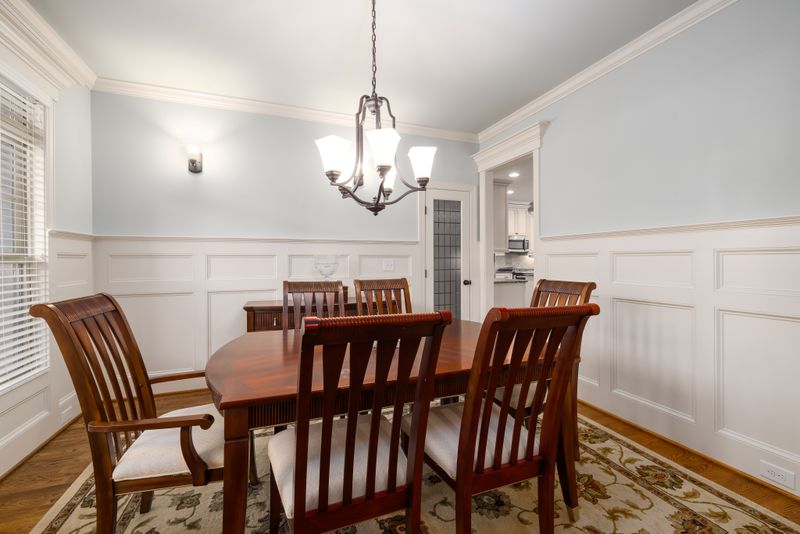
Wainscoting is one of the most transformative trim projects you can tackle in a home. A room that feels flat and forgettable becomes architecturally interesting and intentional with the addition of well-executed wainscoting. From the casual, farmhouse-friendly look of board-and-batten to the formal elegance of raised panels, wainscoting works in virtually every room and every design style.
This guide covers all three major wainscoting styles, chair rail installation, standard heights, and the step-by-step process for each approach — so you can choose the method that fits your skill level, your tools, and your design goals.
Understanding Wainscoting Styles
Board-and-Batten (Easiest)
Board-and-batten is the simplest and most forgiving wainscoting style. It consists of a flat background (the “board” — typically 1/4” plywood or MDF attached to the wall) with vertical strips called “battens” layered on top. A rail cap or chair rail finishes the top edge.
The look is clean and modern, popular in farmhouse, Craftsman, and contemporary interiors. Because the battens are simply glued and nailed in place, there are no complex joints, no router work, and no sophisticated carpentry required. It is the right starting point for first-time wainscoting installers.
Beadboard (Classic and Charming)
Beadboard wainscoting features narrow vertical boards with a routed bead detail between each board — or more commonly today, a plywood or MDF panel that replicates this pattern. Beadboard reads as cottage, coastal, farmhouse, or traditional depending on the paint color and surrounding trim.
You can install individual beadboard planks (most authentic, most labor-intensive) or use 4x8 beadboard panels (fastest and most budget-friendly). Both approaches work well in most rooms.
Raised Panel (Most Traditional)
Raised panel wainscoting is the most formal and architectural of the three styles. Traditional raised panel is built from stile-and-rail frames with routed center panels — a project requiring a router table, shaper, or dedicated router bits. For most DIYers, a built-up approach achieves the same visual effect: flat panels are created using MDF sheets, and decorative molding is applied in a frame pattern over the top to simulate the raised panel look.
This guide covers the built-up approach, which any DIYer with a miter saw and a brad nailer can execute.
Standard Heights
Heights matter both aesthetically and functionally. The “right” height varies by room and ceiling height, but there are useful standards:
- Chair rail: 32” to 36” from the floor. Traditionally at the height of chair backs to protect the wall from being scuffed. In rooms with 8’ ceilings, 32”-34” looks proportional. In rooms with 9’+ ceilings, push to 36” or higher.
- Wainscoting height: Typically one-third of the wall height. In an 8’ room, that is about 32” to 36”. Some designers use a 40”-48” height for a bolder statement — this works well in dining rooms and entryways.
- Board-and-batten height: Often taller than traditional wainscoting — 48” to 60” is common in modern farmhouse interiors.
Choose a height and stick with it throughout the room. Mark the top of your wainscoting in pencil all the way around the room using a level before you start cutting anything.
Tools and Materials
For All Styles
- Miter saw: For cutting rail cap, chair rail, and baseboard
- Level: 4’ or 6’ level for consistent height marks
- Chalk line: For snapping level reference lines around the room
- Stud finder: All nailers go into studs where possible
- Tape measure and pencil
- Caulk gun and paintable latex caulk
- Sandpaper (120 and 220 grit)
- Primer and paint
For Board-and-Batten
- 1/4” MDF or plywood panels (for backing, optional but helpful on textured walls)
- 1x3 or 1x4 pine, poplar, or MDF for battens
- 1x4 or 1x6 for the horizontal rail at the top
- Cap molding or chair rail profile
- Pneumatic brad nailer (18-gauge) with 1-1/4” and 2” brad nails
- Construction adhesive (Liquid Nails or equivalent)
For Beadboard
- Beadboard panels (4x8 sheets) or individual tongue-and-groove beadboard planks
- 1x4 or 1x6 for top rail
- Chair rail molding for cap
- Brad nailer and finish nailer
For Raised Panel (Built-Up Method)
- 1/2” or 3/4” MDF for panel backgrounds
- Flat door casing or ranch molding for the “frame” applied over the panel
- Chair rail for the top cap
- Brad nailer and construction adhesive
Board-and-Batten: Step-by-Step
Step 1: Find Studs and Mark the Height
Use your stud finder to mark every stud from floor to your chosen wainscoting height. Mark the centers lightly in pencil. Next, use your level and chalk line to snap a perfectly level horizontal line all the way around the room at your chosen height. This line is the top of your wainscoting installation — everything you do from here references this line.
Step 2: Install the Top Rail
The top rail (typically a 1x4 or 1x6 board) is installed flat against the wall with its top edge on your chalk line. This gives you a solid nailing surface for the rail cap and a clean horizontal reference for the battens below.
Cut the top rail to fit each wall, mitering outside corners at 45 degrees and butting inside corners (the rail cap will cover the joint). Nail the rail into studs using your finish nailer and 2” or 2-1/2” nails. Check for level as you go — the rail should be perfectly horizontal even if the chalk line drifted slightly.
Step 3: Install Vertical Battens
Decide on your batten spacing. Typical spacing is 12” to 16” on center, but there is no single rule — the spacing should divide evenly into the wall length so you have equal spacing at each end. Spend time with a calculator before you cut anything.
Cut battens (1x3 or 1x4) to length: from the top of the baseboard to the bottom of the top rail. Apply a bead of construction adhesive to the back of each batten and press it against the wall, then nail it with 1-1/4” or 1-1/2” brad nails. Nailing into studs is ideal, but battens are decorative — the adhesive carries most of the load, and nails anywhere in the drywall are sufficient for securing them while the adhesive sets.
Use a level to check each batten for plumb before nailing. Mark the spacing on the top rail and baseboard before you start to keep your lines consistent.
Step 4: Install the Rail Cap
The rail cap sits on top of the horizontal rail, projecting slightly past the face of the battens. A simple chair rail profile or a cap molding with a stepped profile works well. Cope inside corners, miter outside corners. Nail through the cap into the top rail with 1-1/2” brad nails.
Step 5: Baseboard Integration
If you are installing new baseboard as part of this project, install it after the battens are in place. The baseboard covers the bottom edge of the battens and gives the whole assembly a clean base. If existing baseboard is staying, the battens should sit on top of the baseboard — adjust your batten length accordingly.
Beadboard Wainscoting: Installation
Using panels: Cut 4x8 beadboard panels to height with a circular saw. Apply construction adhesive to the back of each panel, press into place, and nail along the top and bottom edges (nails will be hidden by the rail cap and baseboard). Stagger panel seams away from corners if possible. Finish the top edge with a chair rail that caps the panel.
Using individual boards: Install a horizontal 1x4 ledger board at your wainscoting height to act as a nailer. Starting from a corner, install tongue-and-groove planks vertically, nailing through the tongue at a 45-degree angle (blind nailing) so the nail is hidden by the next board’s groove. The last board at each corner or doorway will need to be face-nailed and the nail filled.
One advantage of individual boards: you get a truly authentic, three-dimensional beadboard texture that painted panels can only approximate. The labor is greater, but the result is superior.
Raised Panel Wainscoting: Built-Up Method
Step 1: Plan Your Panel Layout
The most important step in raised panel wainscoting is planning. The panels (rectangular frames with a center field) need to be evenly spaced and proportionally sized. Sketch the room on paper, decide on panel width (typically 18” to 30”), and work out the spacing before cutting anything.
Standard layout: install the wainscoting in two horizontal zones — a lower rail (baseboard level to about 6” up) and an upper zone that holds the panels. The chair rail caps the whole assembly at the top.
Step 2: Install the Stiles and Rails
Using MDF or flat door casing, install vertical stile pieces at each panel division and horizontal rail pieces at the top and bottom of the panel field. These create the visual frame. Nail them with construction adhesive and 1-1/4” brads.
Step 3: Apply the Molding Frame
Run a picture frame molding (flat or with a slight profile) around the inside edge of each stile-and-rail frame. This molding creates the visual effect of a raised panel without any router work. Miter the corners of the molding at 45 degrees. Use small brads and adhesive. The center of the panel (the wall surface between the molding frames) is the “field.”
Step 4: Cap with Chair Rail
Install the chair rail along the top edge of the entire assembly, coping inside corners and mitering outside corners. The chair rail ties the whole system together visually.
Chair Rail Installation: Stand-Alone Guide
Chair rail can be installed without full wainscoting — as a horizontal accent that divides the wall at mid-height. The installation process is identical to a standard trim piece, with a few specifics:
Height: Measure up from the floor (not the baseboard) to establish your height. Run a level line or snap a chalk line around the entire room before installing any pieces.
Level matters more than consistency with the floor: If your floors are out of level (and most are), a chair rail that follows the floor will look crooked. Snap a level line and follow it — the slight variation from the floor will be imperceptible compared to a sloping chair rail.
Corners: Cope inside corners the same way you would for baseboard. Miter outside corners at the actual angle (measure with an angle finder). Chair rail profiles are often more complex than baseboard, making coping especially important for inside corners.
Nailing pattern: At every stud, drive two nails — one near the top edge and one near the bottom edge of the chair rail. At horizontal framing (if present), nail there as well. Between studs, skip the wall — nail only into solid wood.
Caulk and paint: Caulk the top and bottom edges of the chair rail to the wall. Fill nail holes. Prime and paint with semi-gloss or satin for durability.
Caulking and Finishing
Caulking is where wainscoting goes from looking like a DIY project to looking like a professional installation. Apply paintable latex caulk to:
- All joints between trim pieces and the wall
- Inside corners where pieces meet
- The top edge of the rail cap
- The bottom edge of the baseboard (if installing new baseboard)
Smooth all caulk with a wet fingertip before it skins over. Work in sections of 18”-24” at a time.
Prime all raw wood and MDF before painting. MDF in particular requires a dedicated primer coat to seal the surface — skipping primer will result in a blotchy, uneven finish coat. Two coats of a quality satin or semi-gloss paint completes the installation.
Upgrade Your Installation with a Quality Brad Nailer
A pneumatic 18-gauge brad nailer is the ideal tool for wainscoting installation. Brads are thin enough not to split narrow battens or molding pieces, and they leave smaller holes than finish nailers. For most of the work in a wainscoting install — attaching battens, panel molding, and rail caps — an 18-gauge nailer loaded with 1-1/4” to 1-1/2” brads is perfect. Pair it with a finish nailer for the heavier top rail and chair rail work, and you will have every fastening situation covered.
Final Thoughts
Wainscoting rewards careful planning more than any other carpentry skill. Before you cut a single piece of material, spend time walking the room, marking stud locations, snapping level lines, and sketching your panel layout. An hour of planning prevents three hours of fixing mistakes. Once your layout is right and your lines are level, the installation itself is straightforward work — and the result is a room that looks like it belongs in a design magazine.
Related Articles

The Carpenter's Guide Editorial Team
Independent trade-focused editorial team