Best Jigsaws for Woodworking: Buying Guide and Top Picks
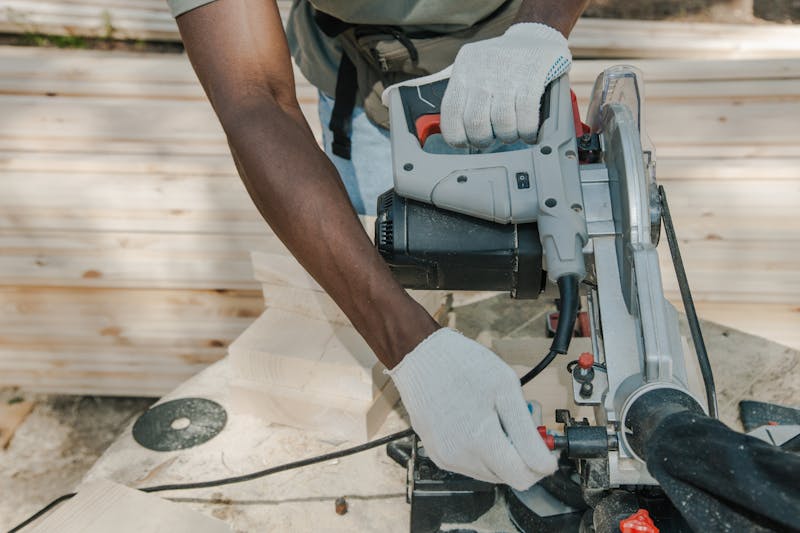
The jigsaw is the go-to tool for curves, cutouts, and irregular shapes in woodworking. Where a circular saw or table saw excels at straight lines, the jigsaw takes over when you need to cut around a template, follow a curved pencil line, or make a plunge cut in the middle of a panel. With the right blade, a jigsaw can cut wood, metal, plastic, ceramic tile, and even leather — making it one of the most genuinely multi-purpose tools in any shop.
Choosing the best jigsaw involves more nuance than most woodworkers expect. Orbital action settings, blade changing systems, base plate materials, and motor power all play a role in how the saw performs in real work. This guide covers everything you need to know, plus specific model recommendations across the budget spectrum.
How Jigsaws Work
A jigsaw moves its blade in an up-and-down reciprocating motion to cut through material. The blade cuts on the upstroke, which means the top face of the workpiece is the “good” face — the face that contacts the saw’s base plate. For finish cuts where you need a clean surface showing, place that face down.
Basic jigsaws move the blade straight up and down. More capable saws add orbital action, which sweeps the blade forward into the cut on the upstroke and backward on the downstroke. This aggressive motion removes material faster and reduces heat buildup in the blade, but it produces a slightly rougher cut. For rough cuts in thick wood, maximum orbital action is faster. For clean cuts in plywood, thin hardwood, or veneered material, reduce orbital action or turn it off entirely.
Key Features to Evaluate
Orbital Action Settings
Most quality jigsaws offer four orbital settings: 0 (straight up-and-down for clean, fine cuts), 1, 2, and 3 (progressively more aggressive orbital sweep for fast, rough cutting). Some budget models offer only on/off orbital action, which limits flexibility. A saw with four settings gives you the range to handle delicate finish cuts and fast ripping in the same session.
Blade Changing System
Jigsaw blades come in two shank types: T-shank and U-shank (also called universal shank). T-shank blades are the modern standard. They’re held by a tool-free clamp mechanism that lets you swap blades in seconds without any wrenches. U-shank blades use a screw clamp and require a tool. Always buy a saw with a T-shank tool-free blade clamp — the convenience difference is significant, especially when switching between wood and metal blades mid-project.
Variable Speed
Variable speed (typically controlled by trigger pressure or a dial) is essential for cutting different materials. Slow speeds work better for metal and plastic; faster speeds are appropriate for wood. A saw with a speed dial lets you set a baseline speed and modulate it consistently throughout the cut, which is valuable for following curved lines.
Base Plate Material and Beveling
The base plate (shoe) sits flat against your workpiece. Cast aluminum or magnesium shoes are rigid and durable — they don’t flex or rock the way stamped steel shoes can on cheaper saws. This rigidity directly improves cut accuracy, especially on long curved cuts.
Most jigsaws bevel to 45 degrees in both directions for angled cuts. Look for a tool-free bevel adjustment with positive stops at 15, 30, and 45 degrees. Some saws require a wrench to loosen the bevel lock — this isn’t a dealbreaker, but tool-free is more convenient.
Vibration Control and Handle Design
Jigsaws vibrate considerably during operation, and sustained vibration causes user fatigue. Better saws use counterbalance mechanisms — an internal weight or mechanism that moves opposite the blade to cancel out vibration. Bosch’s proprietary counterbalance system is the industry benchmark; Milwaukee’s anti-vibration system is also excellent.
Handle design is a personal preference. Top-handle jigsaws are the most common and are preferred for visibility — you can see your cut line clearly. Barrel-grip jigsaws (also called D-handle) sit lower and are preferred by users who want more control in close quarters. Both styles are widely available.
Dust Collection and Blower
A built-in chip blower is valuable for keeping your cut line visible throughout the cut. Without it, sawdust piles up at the blade exit point and obscures your pencil line. Better saws route the motor’s exhaust air directly to a blower port at the base, keeping the cut line clear. A dedicated dust port for shop vac connection is a bonus feature on higher-end models.
Best Jigsaws for Woodworking in 2026
Bosch JS470E — Best Corded Jigsaw Overall
The Bosch JS470E has held its position as the benchmark corded jigsaw for years, and it continues to earn that reputation in 2026. Its counterbalance mechanism is the most effective anti-vibration system on the market in this price range — the saw is noticeably smoother and more pleasant to use for extended sessions than any competitor. The die-cast aluminum base plate is rigid and accurate, the four orbital settings are clearly marked and easy to change, and the T-shank tool-free blade change is fast and secure.
At 7 amps with variable speed from 500 to 3,100 SPM (strokes per minute), the JS470E handles everything from 1/8-inch Baltic birch to 5-inch thick pine. The built-in blower keeps the cut line clear, and the saw accepts any standard T-shank blade. For woodworkers who primarily work with a cord, the JS470E is the saw to buy.
- Power: 7 amps
- Speed: 500–3,100 SPM
- Orbital settings: 4
- Blade system: T-shank, tool-free
- Base plate: Die-cast aluminum
- Best for: General woodworking, corded workshop use
Bosch JS470E Jigsaw
Milwaukee 2737-21 M18 FUEL — Best Cordless Jigsaw
Milwaukee’s 2737-21 runs on the M18 platform and delivers corded-competitive cutting performance in a cordless package. The POWERSTATE brushless motor maintains speed under load — it won’t bog down when you push into thick hardwood the way lower-powered cordless saws do. The anti-vibration system is effective, and the orbital action settings are easy to adjust on the fly.
The saw uses Milwaukee’s keyless T-shank blade clamp and includes an LED work light that illuminates the cut line. Battery runtime is excellent on a 5.0 Ah battery — enough for a full day of intermittent cutting on a single charge. For woodworkers and contractors who want cordless freedom without sacrificing power, the M18 Fuel is the best option available.
- Battery: 18V M18
- Speed: 0–3,500 SPM
- Orbital settings: 4
- Blade system: T-shank, tool-free
- Best for: M18 platform users, job-site use, furniture building
Makita XVJ02Z — Best Cordless Value Jigsaw
Makita’s XVJ02Z is an 18V LXT cordless jigsaw that delivers strong performance at a lower bare-tool price than the Milwaukee. Its brushless motor extends battery life and increases power, and the four orbital settings give it the flexibility needed for varied woodworking tasks. The bevel plate tilts to 45 degrees, and the tool-free blade clamp is smooth and reliable. Sightlines are excellent with the large, clear base plate.
If you’re already invested in the Makita 18V LXT platform, the XVJ02Z is an easy recommendation. It doesn’t quite match the Milwaukee’s top-end power or the Bosch’s anti-vibration refinement, but it’s a capable, well-balanced jigsaw at a fair price.
- Battery: 18V LXT
- Speed: 0–2,600 SPM
- Orbital settings: 4
- Best for: Makita 18V platform users, DIYers, hobbyists
Festool PS 420 EBQ — Best Premium Jigsaw
The Festool PS 420 EBQ is in a different category from the other saws on this list — it’s a tool designed for professional cabinetmakers who demand the absolute best cut quality in thin veneers, delicate hardwoods, and precision-cut furniture parts. Its anti-vibration system is the smoothest of any jigsaw tested, and the MMC (Multi-Material Control) electronics maintain constant blade speed under varying loads.
The PS 420’s base plate accepts Festool’s dust extraction hose directly, and when connected to a Festool extractor, the dust collection is genuinely impressive. The Festool Systainer compatibility makes it easy to store and transport. For professional use where cut quality and dust control are paramount, nothing beats it. For most hobbyists, the price is hard to justify.
- Power: 420 watts
- Speed: 500–3,000 SPM
- Orbital settings: 3
- Best for: Professional cabinetmakers, finish carpenters, dust-sensitive environments
Best Jigsaw Blades by Application
The blade you choose matters as much as the saw itself. Here’s a quick reference:
Curved cuts in softwood and plywood: Use a T101B (Bosch) or equivalent T-shank blade with 10 TPI (teeth per inch). The narrower body allows tight radius turns without binding.
Straight cuts in thick hardwood: Use a longer blade with 6–8 TPI and a progressive tooth pattern. These cut faster with less heat buildup.
Clean cuts in plywood and melamine: Use a reverse-tooth blade — teeth pointing downward so the cut face is on top. Bosch’s T101AO and Diablo’s DS0608BW are reliable options. Pair with a scoring knife on the cut line for tearout-free results.
Cutting metal: Use a fine-tooth blade, 18–32 TPI depending on material thickness. Slow the saw speed down significantly and use cutting fluid for ferrous metals.
Cutting plastic: Use a medium-tooth blade (10–14 TPI) at medium speed. Too fast and the blade will melt the plastic rather than cut it.
Jigsaw Tips for Better Cuts
- Clamp your workpiece firmly. A vibrating workpiece ruins the cut and can cause the blade to wander or break.
- Let the saw do the work. Forcing the saw through the cut causes blade deflection, produces a non-square cut, and shortens blade life. Feed slowly and let the teeth cut.
- Use a sharp blade. Dull blades heat up, deflect, and produce rough cuts. Jigsaw blades are inexpensive — replace them regularly.
- Score cut lines on veneered material. A single pass with a sharp marking knife before cutting dramatically reduces tearout.
- Use a straightedge for long straight cuts. Clamp a straight piece of scrap wood or a dedicated jig saw guide parallel to the cut line to guide the saw’s base plate.
Related Articles

The Carpenter's Guide Editorial Team
Independent trade-focused editorial team